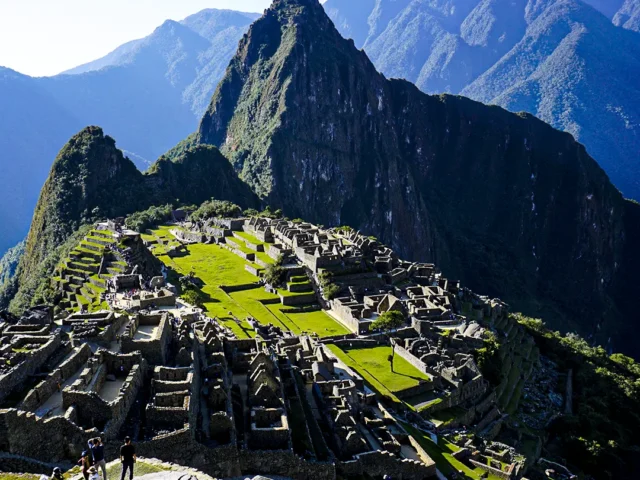


The river flashes between the trees, a mountain wall fills the window and the carriage rounds another bend. The train is more than a transfer for many travelers, but paying for the highest category is not always the best decision.
Choose the departure that fits your archaeological ticket first. Then decide how much you value larger viewing areas, onboard entertainment, dining and personal space. A standard train with a comfortable schedule can serve you better than a premium carriage that forces you to rush.
For many first-time travelers, Expedition or The Voyager provides the practical base. Vistadome or The 360° adds a stronger focus on viewing. Vistadome Observatory adds its observation-car format, while dining-led services suit travelers who want the railway journey to occupy a larger share of the day.
Ask Machu Picchu Andes Tours to compare a complete itinerary before you upgrade. Admission routes can sell out independently of train seats, so both need attention early.
Service information checked 4 November 2026; verify the features and fare terms of your actual departure.

Highlights of a Thoughtful Train Choice
- Keep the river journey in daylight where possible. A viewing upgrade is more useful when you can see the landscape.
- Separate comfort from timing. A suitable departure and return margin often matter more than a small difference in onboard service.
- Upgrade only the leg that matters most. Combining categories can balance the budget without changing the archaeological route.
- Check the whole journey. A rail-only fare and a bus-plus-train fare do not cover the same ground.
- Choose the atmosphere you prefer. Some services emphasize music and performances; others are simpler transport products.
- Avoid paying twice for inclusions. Certain premium arrangements bundle more services than an ordinary rail ticket.
Trip Details
- Main rail companies: PeruRail and Inca Rail, with Belmond’s Hiram Bingham as a distinct premium product.
- Main valley station: Ollantaytambo.
- Destination station: Machu Picchu Pueblo, below the archaeological site.
- Typical valley rail time: approximately 1.5–2 hours, depending on the departure.
- Cusco travel: selected rail departures or a coordinated bus-and-train service, depending on company and calendar.
- Admission: separate from most ordinary train fares.
- Final uphill transfer: separate local shuttle unless specifically included in a package.
- Luggage: service-specific allowance; check the issued fare terms.
- Physical demands: station boarding, town walking and the selected archaeological route.
- Planning window: coordinate the train with the correct admission route before making inflexible purchases.
The Main Services Compared
| Service | What you are mainly paying for | Best reason to consider it |
|---|---|---|
| PeruRail Expedition | Standard tourist rail transport with large windows | Preserve more budget for route, guide or hotel |
| PeruRail Vistadome | Panoramic viewing emphasis and included snack service | Add comfort and window-focused travel without a dining-led package |
| PeruRail Vistadome Observatory | Panoramic carriage plus an open-air observation area and programmed onboard activity | Make the daytime railway leg a bigger part of the trip |
| Inca Rail The Voyager | Standard service with large windows | A practical rail base when its schedule fits |
| Inca Rail The 360° | Panoramic and open-air viewing format | Prioritize the river corridor and changing landscape |
| Inca Rail The Prime | Upgraded carriage setting and onboard service | Prefer a more polished seated journey over an observation-area focus |
| Inca Rail The First Class | Dining and lounge-led service with an open-air area | Give the onboard meal and service more weight |
| Inca Rail The Private | A privately arranged carriage product | Travel as a party with a specifically quoted private rail arrangement |
| Belmond Hiram Bingham | A dining-led journey with broader package elements | Plan the day around the train and its included services |
The table condenses the operators’ current product descriptions. Features vary by service and direction. PeruRail’s comparison, Inca Rail’s comparison and Belmond’s return journey are the starting points for checking your chosen departure.
Expedition or The Voyager for the Practical Base
These are sensible first comparisons if your main goal is the archaeological site and your budget has limits. Both let you travel through the river corridor without making premium dining or an observation area the center of the purchase.
Do not assume the lower category has no useful view. Large windows still show the slopes, river and settlements along the route. The more important questions are whether the journey takes place in daylight, whether the fare begins at the correct station and whether it leaves enough time for admission.
Compare the total return price and the included road segment. A low one-way headline may be attached to a departure that requires a private transfer, an extra night or a late arrival back in Cusco.
For a family, money saved here may pay for a better-located hotel or private archaeological guiding. For a solo traveler, it may leave room for an additional day in the Sacred Valley.
Vistadome vs Vistadome Observatory
What Vistadome adds
Vistadome emphasizes panoramic viewing and a more developed onboard service than the standard base. It suits someone who wants the windows and carriage setting to be a clear part of the journey without paying for a full dining-focused product.
Check what is included on the selected direction. Entertainment, snacks and other onboard elements should be confirmed against that specific departure, not copied from a general photograph or a description of another train number.
What the Observatory version changes
Vistadome Observatory adds an observation-car arrangement with an open-air balcony area and live onboard activity. That is a meaningful difference from simply buying a ticket labeled Vistadome. Official Vistadome Observatory page.
It can suit travelers who want to spend part of the journey away from their seat, watching the river corridor from the observation area. Access remains subject to crew instructions, conditions and the operation of that departure.
The higher fare does not buy different archaeological access. It also does not make a nighttime return a daylight journey. If photography is the reason for upgrading, compare the timing before the service name.
Is the difference worth paying?
Ask for the actual fare difference per person and for the whole party. Then compare it with another useful purchase, such as a hotel night or private guide.
If four people each pay US$70 more for one rail leg, the total upgrade is US$280. That simple calculation helps you decide whether the observation-car format is where you most want to spend the money. The US$70 is an example, not a quoted fare.
The 360° and The Prime Are Different Choices
Inca Rail presents The 360° around panoramic and open-air viewing, while The Prime emphasizes its carriage setting and onboard presentation. They should not be treated as interchangeable names for the same upgrade.
If you want to move to an observation area and watch the corridor outside, compare The 360°. If you prefer a more seated, service-led journey, investigate The Prime. Ask about current food, entertainment and transfer inclusions rather than assuming every benefit operates identically on every departure.
Inca Rail’s current comparison lists coordinated Cusco transfers among its product benefits, but a booking can still be made for a particular route and origin. Confirm the purchased segment in writing; do not infer an included hotel pickup from a general bus-transfer description.
When Dining-Led Services Make Sense
The First Class and Hiram Bingham can suit a celebration or a traveler who wants to devote more of the day to onboard food and service. The value is broader than the size of a window.
Belmond’s return Hiram Bingham description includes onboard meals, local uphill and downhill transport and guided arrangements. Exact inclusions depend on the journey purchased, and one-way or return-only products need separate checking. Belmond return-trip inclusions.
Before comparing a premium package with standard rail, remove duplicate costs from your calculation. If admission or shuttles are included, do not add them again. Conversely, never assume that a First Class label automatically covers every archaeological service.
Tell the operator about allergies before paying. A preplanned dining service may have less flexibility than a restaurant where you choose on arrival. Ask whether the menu can meet the requirement and whether any alternative changes the price.
Private Tour vs Private Train
A private Machu Picchu tour usually means private road transfers and guiding. It normally still uses scheduled rail seats and the shared local shuttle.
A private carriage is a separate, specifically quoted railway product. Its availability, party capacity and operating terms must be confirmed by the railway provider. Do not infer it from the word “private” in an agency package title.
Ask Machu Picchu Andes Tours to mark each component as private or shared. This is especially useful for celebrations, families with assistance needs and groups that want to travel together without misunderstanding what the price covers.
Choose the Schedule Before the Category
Work backward from your archaeological ticket. Allow time to leave the railway station, reach the shuttle, queue, travel uphill and complete entry checks. A premium train that arrives too close to admission is still the wrong train.
On the return, include the walk out, downhill queue, lunch and baggage collection. Mountain routes need larger margins. Your itinerary should not depend on every stage taking its shortest possible time.
Check whether the outward and return stations differ. A package may start with a Cusco bus and end with a train at Ollantaytambo, requiring another road transfer. PeruRail schedules and Inca Rail route information should be read alongside the issued ticket.
Can you mix companies or categories?
Different categories on the outward and return legs can be sensible. Using different companies may also work, but it can mean different offices, luggage arrangements and change conditions.
Keep the itinerary easy to follow. The small saving from mixing several separately issued products may not be worth extra handovers if you are traveling with young children or significant luggage.

Luggage, Seating and Practical Comfort
Rail baggage rules have changed and some published pages differ. PeruRail’s current luggage page lists service-dependent backpack and carry-on limits; the old blanket “5 kg” statement should not be applied automatically to every current fare. Follow the allowance attached to your booking and request written clarification if needed. PeruRail luggage information.
Inca Rail also publishes its own conditions. A baggage-storage benefit is not the same thing as permission to take a large suitcase into the carriage. Inca Rail terms.
Ask about seating together, accessible boarding, a wheelchair or mobility aid and any assistance required at the station. Do this before purchase. The railway journey and the archaeological site have separate physical constraints.
Keep medication, passports and essential valuables with you. Headphones can be useful if you prefer less onboard sound, although you must still hear safety and boarding instructions.
A Two-Day Plan With One Deliberate Upgrade
First Day — Make the Daylight Rail Leg Count
Travel from Cusco to the boarding point with enough margin to avoid a rushed station arrival. Use a daytime service if the landscape is central to your decision. As the train follows the river, put the phone down occasionally and watch the slope, vegetation and water change together.
Choose a standard or upgraded outward train according to the budget. Once in Machu Picchu Pueblo, check into the hotel and review the next day’s meeting point. A simple evening gives you time to prepare the smaller bag required at the site.
Daily highlight: watch the river corridor from the carriage format you chose for a clear reason.
- Transport: road or included bimodal bus, then scheduled train.
- Typical valley rail duration: 1.5–2 hours; longer for other origins.
- Walking: approximately 1–3 km / 0.6–1.9 miles through stations and town.
- Overnight: Machu Picchu Pueblo, around 2,040 m / 6,693 ft.
- Surface: station platforms, steps and sloping town streets.
Second Day — Archaeology First, Comfortable Return Second
Take the local shuttle to the archaeological entrance and follow the ticketed route. The stone paths, terraces and surrounding slopes deserve your attention without concern over whether the return train is too early.
After descending, eat and collect stored bags. If the return will be after dark, decide whether onboard dining or a simpler train better serves your priorities; a viewing upgrade has a different value once the landscape is no longer visible.
Daily highlight: combine a properly timed archaeological route with a return service that fits your energy and budget.
- Transport: local shuttles, train and final road segment to Cusco.
- Walking: roughly 1.5–2.5 hours for many standard archaeological routes, within ticket limits.
- Site elevation: approximately 2,430 m / 7,972 ft.
- Difficulty: stairs and uneven stone; mountain products require separate planning.
- Overnight: Cusco, with hotel arrangements confirmed separately.
Private Service Price Proposal
The following is an illustrative 2027 package proposal using standard scheduled return trains, not a live rail fare or confirmed Machu Picchu Andes Tours tariff. It includes private Cusco road transfers, one ordinary admission, local return shuttles, private archaeological guiding and one twin-share hotel night with breakfast.
| Adults in the party | Planning price per person | What remains shared |
|---|---|---|
| 2 | US$595 | Scheduled rail seats and local shuttles |
| 4 | US$545 | Scheduled rail seats and local shuttles |
| 6 | US$525 | Scheduled rail seats and local shuttles |
The private benefit lies in road and guide coordination. The figures exclude flights, Cusco lodging, most meals, tips, insurance, mountain products and rail upgrades. Ask for all fees and taxes in the final payable quote.
Shared Service Proposal
Illustrative shared price: US$495 per adult for the same overnight framework with shared road transfers and archaeological guiding. Confirm the group cap, language and actual train departures.
Travelers may come from several countries, and the guide follows a common pace. Private guiding can make discussion more personal, but it cannot change the railway departure or extend official archaeological route limits. A direct two-day operator product provides context for comparing train-and-hotel package structures.
Rail Upgrades and Other Additions
Use US$40–100 per person for one direction as a preliminary panoramic-upgrade allowance only. The actual fare difference may fall outside that range. Request a dated price for the precise train number and compare it with the base fare it replaces.
Dining-led services and private carriages need individual quotations; they should not be represented by a small generic upgrade fee. An extra twin-share night can be budgeted initially at US$40–90 per person, then confirmed with the named hotel.
Discounts
Rail child categories, promotional fares and government student admission are separate. A train sale may restrict changes or exclude discounted categories. Ask for a final net quote and carry the documentation required by each supplier.
Do not assume that a university card reduces the rail fare or that a fixed US$30 or US$40 reduction applies to the whole package. The actual ticket conditions determine eligibility.
Why Ask Machu Picchu Andes Tours to Compare the Trains?
Ask the team to show you two complete alternatives with the same archaeological route and hotel standard. That makes the rail difference easier to judge. If one alternative changes the admission or return timing, it is no longer a simple train upgrade.
Request transparent details on guide language, road transport, basic first aid and a contact for operational changes. This journey depends on well-matched suppliers, not unsupported claims of private railway access.
Where time permits, choose locally run restaurants and services in Ollantaytambo and Machu Picchu Pueblo. Respect railway staff and local residents during busy boarding periods. Ask which provider handles any dietary request during the journey, so the restaurant, hotel or onboard crew can confirm it.
Inclusion Checklist
- Exact train company, category, route and departure in both directions.
- Road segment and its boarding point, if included.
- Admission ticket and selected circuit, if sold as a package.
- Local uphill and downhill shuttles, if included.
- Guide coverage and meeting point.
- Hotel name, room type and breakfast.
- Onboard food, drinks and entertainment applicable to your departure.
- Luggage allowance, storage terms and assistance arrangements.
- Taxes, fees, change conditions and final Cusco drop-off.
Preparation, Packing and Availability
Months ahead: match admission and rail options, then book compatible services when official inventory is released. A railway accepting 2027 bookings does not prove that every 2027 archaeological route is already on sale.
A few days ahead: read the current operational notices, check boarding addresses and confirm stored-luggage collection. Save tickets offline and make sure identity details match.
On the day: arrive according to the operator’s boarding instructions, keep the platform clear and follow crew directions in observation areas. Keep hands and equipment within permitted spaces.
Bring documents, medication, a small bag, light waterproof layer, a warm layer for Cusco, comfortable shoes and sun protection. Leave prohibited items before entering the archaeological site. Official site conduct rules apply separately from train rules.
Return From Machu Picchu to Cusco
Check the return endpoint before boarding. It may be Ollantaytambo, a Cusco-area station or a bimodal bus destination. A rail ticket does not automatically include the final ride to your hotel.
Allow time for the local shuttle down, food and baggage collection before the return train. Keep an essential flight away from the immediate arrival window, because delays can affect both rail and road segments.
Deposits may be needed to issue named tickets and hold rooms. Ask which parts are refundable or changeable before payment, and obtain the process for a service substitution or operator cancellation. Do not assume all fare categories have the same terms.
Disruptions and Health Considerations
Weather, roadblocks and railway interruptions can change the service. A premium fare cannot remove those risks. Agree to a revised station, earlier departure or additional night after the effect and costs have been explained.
Allow time to adjust to Cusco’s altitude before demanding walking. If you feel unwell, tell the guide or crew rather than concealing symptoms to preserve the itinerary. Worsening altitude illness needs medical assessment and descent; severe symptoms require urgent help. CDC altitude guidance.
Frequently Asked Questions
Is Vistadome Observatory the same as Vistadome?
No. The Observatory product adds its observation-car format and associated onboard program. Confirm what operates on your selected departure.
Which train is best value?
The best-value train is the one whose timing, inclusions and comfort match your priorities. Start with standard services, then compare the actual upgrade cost.
Can I take one category outward and another back?
Often yes, subject to availability and fare conditions. A daytime upgrade in one direction can be a sensible compromise.
Does a better train include a better Machu Picchu circuit?
Not automatically. Admission is a separate entitlement unless a package explicitly includes it, and its route must still be confirmed.
Is private guiding enough to make the train private?
No. A private carriage requires a separate railway arrangement. Ask the agency to label every component clearly.
What should I send for a recommendation?
Give Machu Picchu Andes Tours your ticket time, overnight base, party size, budget, dietary needs and preference for views, quiet travel or onboard dining. Ask for two comparable dated options rather than a list of train names alone.