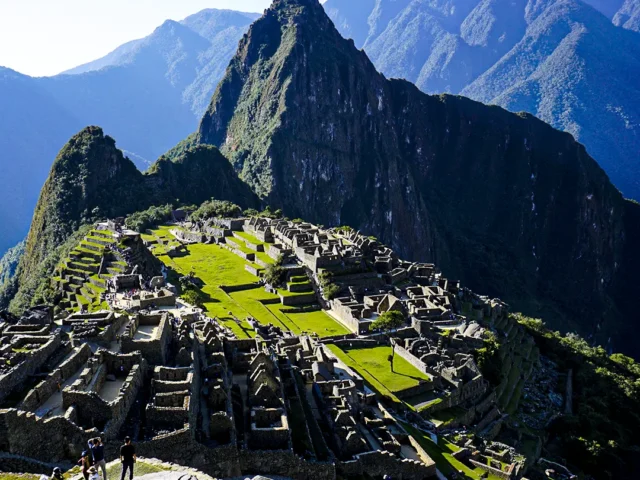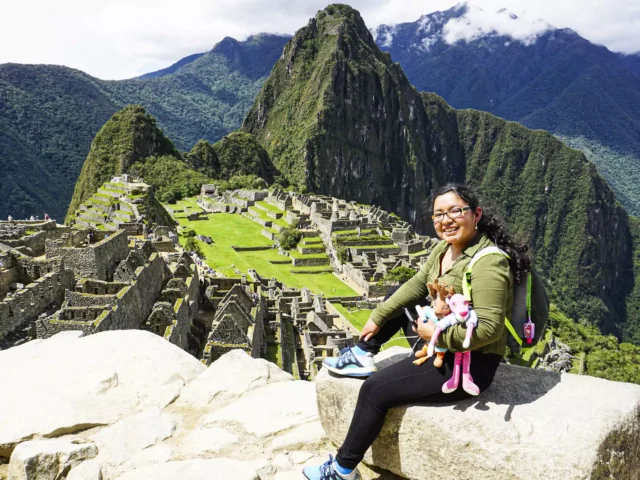


The journey changes around you as Cusco’s high streets give way to the Sacred Valley and the river draws the train between steep green slopes. Reaching Machu Picchu is part road journey, part railway journey and a final climb from the town below.
For most travelers, the simplest plan is Cusco to Ollantaytambo by road, train to Machu Picchu Pueblo, then a shuttle to the archaeological entrance. A coordinated bus-and-train ticket can combine the first two stages. Selected rail departures also operate from stations in or near Cusco, subject to the service calendar.
The key is to match those stages to your admission time. A train ticket alone does not grant entry to Machu Picchu. Machu Picchu Andes Tours can arrange a proposal that brings the route, rail service and final hotel return together. Start early when the circuit matters to you, because admission inventory can sell out.
Transport information checked on 4 November 2026. Reconfirm services for your actual travel date.

Highlights of the Journey
- Watch the landscape change with the elevation. The cooler Cusco departure gives way to a warmer river corridor near Machu Picchu Pueblo.
- Use the Sacred Valley as more than a transfer point. A night in Ollantaytambo can fit a wider itinerary and reduce repeated road travel.
- Choose the right amount of coordination. Separate tickets offer control; a combined service reduces the number of handovers you manage yourself.
- Reach town before your admission day. An overnight stay makes early entries and mountain routes easier to organize.
- Keep the final uphill stage visible in your plan. The railway station is in town, not beside the archaeological gate.
- Know how you will get home. A named return pickup is particularly valuable after a long day of walking and rail travel.
Trip Details
- Usual starting city: Cusco, approximately 3,400 m / 11,155 ft.
- Common rail boarding point: Ollantaytambo, approximately 2,790 m / 9,154 ft.
- Rail destination: Machu Picchu Pueblo, also called Aguas Calientes, around 2,040 m / 6,693 ft.
- Archaeological site: approximately 2,430 m / 7,972 ft.
- Typical road allowance: 1.5–2.5 hours from Cusco to Ollantaytambo, depending on route and traffic.
- Typical rail allowance: about 1.5–2 hours from Ollantaytambo to Machu Picchu Pueblo.
- Final shuttle: roughly 25–30 minutes of driving, plus queueing.
- Suggested duration: one long day or two days with an overnight stay.
- Walking conditions: town slopes, station steps and irregular stone inside the site.
- Main documents: accepted original identification and the relevant rail and admission tickets.
Travel times are planning estimates, not guaranteed connections. PeruRail’s station guidance and timetables should be checked against your issued booking.
The Main Transport Options Compared
| Option | How it works | Suits you if | Main limitation |
|---|---|---|---|
| Road transfer plus train from Ollantaytambo | Book the vehicle and rail segments separately or through an agency | You want control over the valley stop or hotel pickup | You must coordinate the transfer margin |
| Bimodal bus and train | One operator coordinates a road segment and a rail segment | You want fewer separate arrangements | Fixed boarding point and transfer sequence |
| Selected rail service from Cusco-area stations | Longer rail itinerary when operating | You prefer more time on the train | Seasonal or service-specific availability |
| Road approach through Hidroeléctrica | Longer road journey plus an authorized final rail or pedestrian arrangement | You have extra time and accept a more demanding transfer | Weather, access rules and long travel days |
| Inca Trail or another trek | A multiday walking itinerary with its own logistics | The hike is a central part of the holiday | Permits, fitness and more days required |
Travel Through Ollantaytambo
Arrange the road segment
Ollantaytambo is a practical rail gateway because many services start there. A private transfer can collect you at your hotel if road access permits. Shared services may use a central meeting point and can include additional pickups.
Ask whether the transfer is direct or part of a sightseeing day. A Sacred Valley tour that ends at the station needs its own realistic timetable; it should not squeeze extra stops into the margin reserved for rail boarding.
Traffic, roadworks and local events can slow the journey. Do not schedule a vehicle using only the shortest estimated drive time you find online. The train operator’s boarding requirement comes before the departure printed in large type on the ticket.
Board the train
Keep the original ID, rail ticket and approved hand luggage ready. Check the station and the operator, because nearby offices and waiting rooms do not all serve the same purpose.
During the journey, the river corridor becomes narrower and wetter-looking as the vegetation thickens. Seat orientation and lighting affect photographs, but a workable departure time is more valuable than a promise of the “best side” of the carriage.
Finish the journey from town
The rail journey ends in Machu Picchu Pueblo. You still need to reach the uphill shuttle departure point, queue and travel to the archaeological gate. Those minutes must be included when choosing an admission slot.
PROMPERÚ’s access guidance distinguishes the rail arrival from this final ascent and recommends allowing time for the shuttle or the longer stair route. Official planning guidance.
What Does Bimodal Mean?
Bimodal means bus plus train. It does not mean two trains, and it does not automatically include the local shuttle from town to the ruins.
For Inca Rail, Cusco departures use a coordinated road segment to Ollantaytambo followed by the train. Its Cusco offices and boarding points have different functions, so follow the address on your ticket rather than going to a familiar-looking sales office. Inca Rail boarding-point guide.
PeruRail also operates bimodal services. Depending on the departure, the change between bus and train can take place at a specified intermediate station. Do not assume every service changes in the same place. PeruRail operating information.
A combined service can simplify coordination when you are staying in Cusco. If you are already sleeping in the Sacred Valley, a rail-only ticket from the appropriate valley station may make more sense.
Can You Take a Train Directly From Cusco?
Selected PeruRail services use San Pedro or Poroy when their operating calendar permits. Poroy is outside the central hotel district and still requires a transfer. Wanchaq often serves as the starting point for a bimodal arrangement rather than the place where you necessarily board the Machu Picchu train.
The distinction matters when comparing prices. A ticket labeled “Cusco” may begin with a bus, while a longer rail journey can include more time on board. Read the itinerary segment by segment.
Do not extend a 2026 timetable into 2027 without checking. PeruRail issued several service-specific station changes during 2026, demonstrating why the confirmation should control your plan. October 2026 operational notice.
Can You Drive All the Way to Machu Picchu?
There is no ordinary through-road journey from Cusco that delivers a tourist vehicle to the archaeological entrance. Road access toward Hidroeléctrica is a different approach, followed by a final rail or authorized pedestrian stage to Machu Picchu Pueblo.
A “Machu Picchu by car” package therefore needs careful reading. Ask how far the vehicle goes, what happens next, how much walking is required and whether the final access fee or authorized operator arrangement is included.
The longer road approach can involve winding roads, high passes and a demanding day. It should not be sold as a quick substitute for the standard Sacred Valley rail journey.
Current Hidroeléctrica considerations
PeruRail announced the resumption of regular Hidroeléctrica–Machu Picchu operations from 4 November 2026, following authorization from the track concessionaire. That announcement is a dated operating update, not a guarantee for all 2027 dates. Official resumption notice.
For a pedestrian approach, verify current access controls, opening periods, required operator arrangements and the permitted path. The active railway is not an unrestricted hiking route. Follow the instructions of the sanctuary and railway authorities. SERNANP access information.
If you choose this approach, allow a separate overnight plan and a weather contingency. Do not pair it with a tightly timed same-day flight from Cusco.
Walking Up From Machu Picchu Pueblo
The stair route from town is a separate decision from the route inside the archaeological site. It involves a substantial uphill effort before you begin the walk you bought your ticket for.
Allow approximately 1.5–2 hours or more depending on the starting point, conditions and pace, plus time at control points. Humidity, rain and the steps can make it tiring. Walking down later also places strain on knees.
The shuttle is often the more sensible choice for travelers who want to preserve energy for the archaeological route or a mountain ascent. If you walk, verify current path access and do not use the vehicle road as an improvised shortcut.
Reaching Machu Picchu on Foot Through a Trek
The Inca Trail is a separate regulated product, arranged through an authorized operator with specific permits. It is not a public shortcut that can be added to a rail ticket after arriving in Cusco. A Short Inca Trail itinerary also needs its own entry arrangements.
Salkantay and other trekking routes have different transport, accommodation and admission structures. Some finish near the Hidroeléctrica approach, while others use rail at the end. Ask exactly how the last trekking day reaches town and which Machu Picchu route is included.
If the main goal is simply to reach the archaeological site comfortably, a rail itinerary is more direct. Choose a trek because you want the walking days, not because an incomplete price comparison makes it appear to replace every other cost.
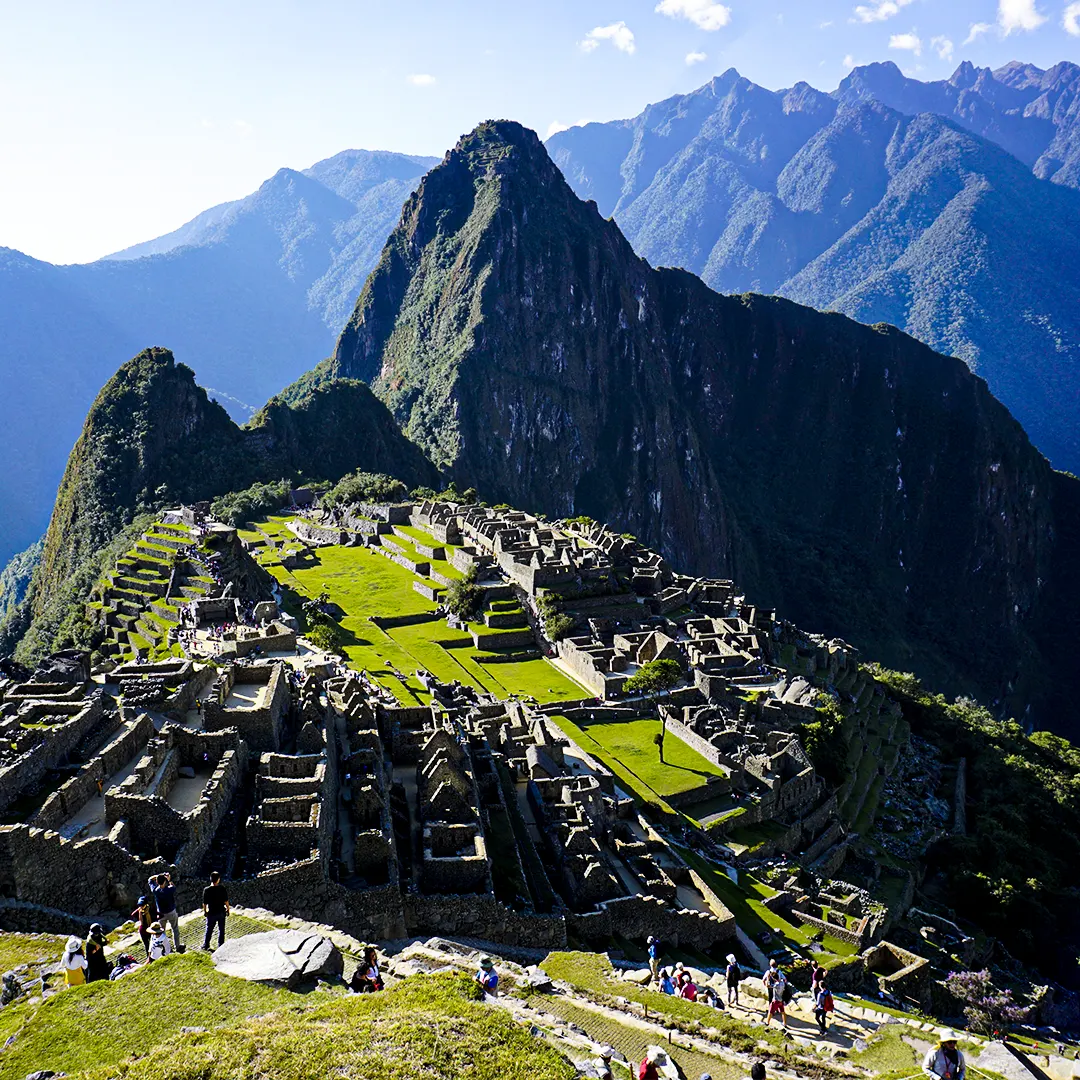
A Practical Two-Day Rail Itinerary
First Day — Cusco, Ollantaytambo and Machu Picchu Pueblo
Leave Cusco in the morning or afternoon according to your train. The road passes through changing upland and valley scenery before reaching Ollantaytambo. If time allows and a stop is included, take a short walk through town without eating into the boarding margin.
On the train, keep a light layer handy. The temperature outside changes along the route, while the carriage may feel different from the platform. After arrival, walk to your hotel and confirm the shuttle meeting plan for the next day.
Daily highlight: follow the river toward the forested slopes below Machu Picchu, with the next morning’s access already arranged.
- Transport: private or shared vehicle, scheduled train and short walks.
- Road time: approximately 1.5–2.5 hours, traffic dependent.
- Rail time: approximately 1.5–2 hours from Ollantaytambo.
- Walking: around 1–3 km / 0.6–1.9 miles across stations and town.
- Overnight: Machu Picchu Pueblo, approximately 2,040 m / 6,693 ft.
- Difficulty: light activity; station steps and town slopes may matter for reduced mobility.
Second Day — Archaeological Route and Return to Cusco
Take the shuttle uphill with room for queueing and identity checks. Follow the route at a steady pace. Granite steps may feel slick after a shower, and some passages are too narrow for long stops; move to the permitted explanation points with your guide.
After exiting, descend to town, eat and collect luggage before the return train. Your road transfer should be waiting at the confirmed station or the package should identify the operator’s included bus segment.
Daily highlight: complete the archaeological route with enough time left for a meal and an organized return.
- Transport: local shuttles, scheduled train and road transport to Cusco.
- Archaeological walking: commonly about 1.5–2.5 hours on a standard route, within its official limit.
- Site elevation: approximately 2,430 m / 7,972 ft.
- Surface: uneven stone and repeated steps.
- Return endpoint: Cusco hotel or a specified accessible drop-off, as confirmed.
Can You Do It in One Day?
Yes, with compatible admission and trains. Expect an early start and a late return when road transfers from Cusco are included. Do not choose the admission time before checking whether the available train can reach it with a sensible margin.
A one-day arrangement is less forgiving of delays. It also may not fit the mountain route you want. Compare the two formats in Machu Picchu One-Day vs Two-Day Tours.
Avoid planning an essential flight immediately after the return. A scheduled arrival time is not a promise that road and rail operations will run without delay.
Private Transport and Guiding Price Proposal
The following illustrative 2027 proposal covers the two-day rail itinerary above: private Cusco road transfers, standard scheduled return trains, one ordinary admission ticket, local return shuttles, private archaeological guiding and one twin-share hotel night with breakfast.
| Adults in the booking | Planning price per person | Main benefit |
|---|---|---|
| 2 | US$595 | One coordinated party and your own road transfer |
| 4 | US$545 | Fixed transport and guide costs shared within the family or party |
| 6 | US$525 | Lower per-person fixed costs with private road coordination |
These are not confirmed Machu Picchu Andes Tours tariffs. The rail carriage and local uphill shuttle remain shared. Exclusions are flights, Cusco hotels, most meals, insurance, tips and mountain-specific products.
Shared Service Proposal
Illustrative group price: US$495 per adult for the overnight itinerary with shared transfers and guiding. Confirm the group cap, language, pickup sequence and minimum departure conditions.
Sharing transport can lower the coordination cost, but the vehicle follows a common route and pace. Travelers may come from several countries. Private road service offers more control over approved stops; it does not allow late arrival at rail boarding.
For context, compare the scope of the agency’s published day tour with a direct operator’s overnight rail product. Different durations and inclusions require separate quotations.
Optional Additions and Discounts
Allow US$40–100 per person as an illustrative one-way panoramic rail upgrade and US$40–90 per person for an extra twin-share hotel night. A Sacred Valley sightseeing transfer needs a separate quote with admissions, guiding and station timing specified.
Admission, rail and hotel discounts follow different rules. Provide the documents required for any eligible child, student or nationality category before purchase. Request the final net total; do not assume a fixed reduction on every package.
Why Coordinate the Route With Machu Picchu Andes Tours?
Ask the Cusco team to turn the journey into a clear sequence of responsibilities: who collects you, where the train begins, who meets you in town and how you return to the hotel. That prevents the gaps that often make a complicated itinerary tiring.
Request a suitable vehicle with working seat belts, a driver familiar with the planned road, an identified guide and basic first-aid arrangements. Confirm how the team assists with boarding, manages luggage and communicates any change to the return transfer.
Where the itinerary allows it, spend time and money in local businesses in Ollantaytambo and Machu Picchu Pueblo. Ask before taking photographs of people and do not expect residents to interrupt their work for a travel schedule. Formal partnerships or community contributions should be described only when confirmed.
Inclusions and Exclusions to Check
- Hotel pickup or a clearly named meeting point in Cusco.
- Exact road segment, including whether it is private, shared or bimodal.
- Train company, service, stations and both directions.
- Local shuttle tickets, separate from the rail service.
- Admission route and entry time.
- Guide language and meeting point.
- Hotel, breakfast and luggage arrangements for overnight plans.
- Final return transport and the drop-off location.
Meals, insurance, gratuities, extra circuits and airport transfers should be expressly included or excluded. If you need a diet-specific meal, ask which provider is responsible and whether an extra cost applies.
Preparation and Packing
Months ahead: choose the route, check realistic train options and begin planning up to six months before fixed dates. Inca Trail travel needs its own authorized permit inquiry.
Days ahead: reconfirm the pickup address, live train notices, weather and luggage terms. Check that the hotel can store your main suitcase and that someone can return it when you arrive back.
During travel: keep documents and medication with you, follow boarding instructions and check the seat area before leaving each vehicle. Do not hand valuables to an unidentified person offering to “help” with a transfer.
Bring a compact bag, accepted original ID, offline tickets, waterproof layer, warm Cusco layer, grippy shoes, water, sun protection and personal medicines. The site’s bag restrictions differ from rail allowances. Official site rules and the rail fare conditions both apply.
Tell reservations ahead of time about mobility aids, wheelchairs, serious allergies, assistance needs or professional camera equipment. Accessible boarding and archaeological access require individual confirmation.
Return From Machu Picchu to Cusco
Check the return in three separate stages: descent to town, rail journey and final road transfer. The outward and return services may use different stations or combinations of transport.
If the train ends at Ollantaytambo, obtain the driver’s meeting instructions. If it continues to a Cusco-area station or includes a bus, ask where that service ends. Hotels on pedestrian streets may require a final walk, which should be explained in advance.
Keep enough time for lunch and stored-luggage collection before boarding. Do not rely on being able to change to a later train without a fee or available seat.
Payments, Disruptions and Health
Request a written payment schedule tied to ticket and hotel commitments. Named admission and rail tickets may have restrictive change terms, so verify identity details before authorizing purchase. No universal agency cancellation policy is assumed here.
Strikes, roadblocks, landslides and railway interruptions can affect the route. Follow official operating decisions and agree to any alternative departure, added night or revised cost before the agency proceeds. Do not cross a blocked or closed route to protect a booking.
Although the destination is lower than Cusco, arrival at altitude can still cause illness. Allow adjustment time, avoid demanding exercise while unwell and seek medical advice for worsening symptoms. Severe symptoms need urgent help and descent. CDC altitude guidance.
Frequently Asked Questions
Does the train stop at the archaeological gate?
No. It stops in Machu Picchu Pueblo, below the site. Add the shuttle or authorized uphill walk to your timing.
Is a Cusco train ticket always rail-only?
No. Some products begin with a bus segment. Read the complete journey and boarding address.
Should I sleep in Ollantaytambo or Machu Picchu Pueblo?
Ollantaytambo can fit a Sacred Valley itinerary. Machu Picchu Pueblo is the more direct base for an early admission or mountain route. Compare the ticket time and the next day’s transport.
Can I take a taxi straight to Machu Picchu?
A taxi can cover an authorized road segment, but it does not replace the rail or regulated final access stage to town and the separate uphill transfer.
What information does the agency need?
Send dates, party size, hotel address, preferred circuit, train budget, luggage needs and walking limitations. Ask Machu Picchu Andes Tours for the complete outward and return sequence before paying.