




You can choose your own hotel in Cusco, spend an afternoon over lunch in the Sacred Valley, and still have someone coordinate the train and entrance for Machu Picchu. The decision does not have to cover every hour of the trip in the same way.
Independent travel suits people who like managing bookings and making decisions on the move. A tour suits people who want an agreed sequence and help coordinating several suppliers. Private and shared services offer different levels of control, cost, and social time.
For many first-time travelers, a combination works well: arrange straightforward city days yourself and use an operator for the more complicated sections. Machu Picchu Andes Tours can quote those sections separately so you can decide where support earns its place. The examples below use information checked on 4 November 2026; all proposed 2027 budgets require dated confirmation.

Highlights of Choosing the Right Travel Style
- Keep free time where you want it while arranging the difficult transfers in advance.
- Compare the complete price of equivalent services rather than a package headline with an entrance ticket.
- Choose a private guide when discussion, pacing, or a particular interest matters most.
- Use shared outings when a fixed route and traveling with others suit you.
- Retain control over hotels and meals without taking responsibility for every rail and road link.
- Identify activities that require an authorized operator before building an independent route around them.
Trip Details
- Main comparison: self-arranged travel, shared tours, private tours, and a mixed approach.
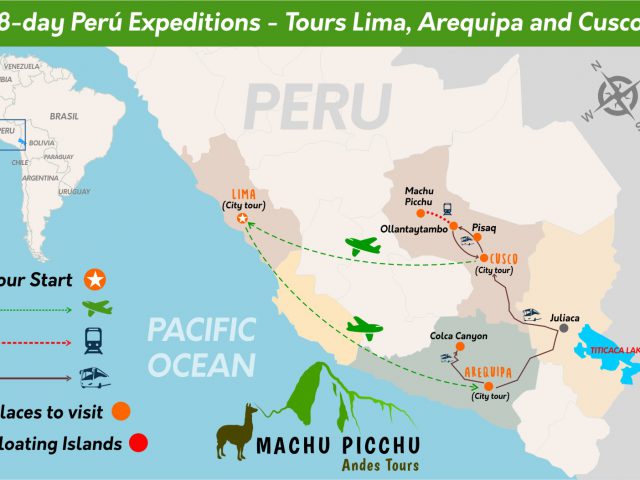
- Destinations considered: Lima, Cusco, the Sacred Valley, Machu Picchu, and optional trekking or Amazon sections.
- Sample program: five days and four nights in the Cusco region.
- Transport in the sample: road vehicles, tourist train, and the Machu Picchu shuttle.
- Accommodation: hotels, with no camping in the base itinerary.
- Walking: short to moderate outings, including archaeological stairs.
- Booking priority: match entrance route, rail, transfers, and overnight location.
- Price basis: proposed US-dollar budgets, double occupancy, flights excluded.
What Each Style Actually Means
Independent Travel
You choose and purchase the main components: hotels, transport, tickets, activities, and guiding. You can still hire a guide for a few hours or join a day excursion. Independence describes who manages the overall plan, not a rule that you must do everything alone.
The benefit is control. You can change a museum afternoon into a long lunch without negotiating with a group. The responsibility is also yours: if a train changes, you must work through its effect on the hotel, guide, and onward transfer.
Shared Tours
You book a defined route with other travelers. The operator coordinates the included services and sets common meeting points and activity times. This can reduce the cost of a vehicle and guide, especially for one or two people.
Ask how the group works. A package may combine several day tours with different participants rather than keep one group together throughout. Language, passenger cap, pickup order, and walking pace should be clear before payment.
Private Tours
Your party has its own guide and specified road services. Stops and discussion time can often be adjusted within the itinerary, supplier conditions, and entrance restrictions.
Private service does not automatically include every possible upgrade. Tourist trains, shuttle buses, boats, or lodge activities may still be shared. A written quote should identify which parts are private and which use public or pooled transport.
A Mixed Approach
You manage the parts you feel comfortable arranging and book support for the rest. For example, choose Lima accommodation yourself, use a private Sacred Valley day, and have one operator coordinate the Machu Picchu overnight and return.
This approach can preserve flexibility without requiring you to solve every connection. Its success depends on defining where each provider’s responsibility begins and ends.
Side-by-Side Comparison
| Factor | Independent | Shared tour | Private tour |
|---|---|---|---|
| Daily decisions | Mainly yours | Common route and pace | More room to tailor agreed land services |
| Booking work | You coordinate suppliers | Operator coordinates included components | Operator coordinates a customized set of components |
| Cost structure | Pay each component directly | Fixed costs divided among participants | Fixed costs divided within your party |
| Guiding | Added when you choose or when required | Usually follows the group program | More time for your questions and interests |
| Social element | Depends on your choices | Regular contact with other travelers | Mainly your own party and staff |
| Changes | You contact each supplier | Subject to the group and supplier rules | More logistical flexibility, still subject to supplier rules |
| Responsibility for missed links | Primarily your planning task | Depends on the package contract | Depends on the package contract |
| Best fit | Travelers comfortable managing details | Travelers content with a common schedule | Families or parties with specific pacing and interests |
The middle columns are not guarantees of quality. A poorly specified private package can be less useful than a carefully chosen shared outing. Compare the actual service description.
Which Parts of Peru Are Easier to Arrange Yourself?
Lima and Cusco City Days
Hotels, restaurants, museums, and short urban outings are often straightforward to arrange individually. Give yourself a sensible neighborhood base and check the opening arrangements for the places you want to enter.
A guide can still add value when your interest is architecture, archaeology, food, or a particular collection. You are paying for interpretation and a coherent route, not only transport between points.
The Sacred Valley
Independent travel works when you understand where the sites sit and how you will move between them. A private vehicle becomes more attractive when several people share it or when you want stops away from the usual pooled route.
Choose a realistic site combination. Time spent climbing terraces, having lunch, or speaking with a craft producer needs room in the day. A list of six places can disguise a route dominated by the road.
Machu Picchu
Independent booking is possible through the official ticket platform, with rail, shuttle, hotel, and guiding arranged separately. The coordination matters: the correct entrance route must fit the train and the night before it. Official ticket platform
The regulation published in September 2026 recommends a tourism guide; it should not be described as a universal rule requiring every traveler to buy a complete agency package. Confirm any later operational changes for your date. A guide remains useful for interpretation and moving through the permitted route. Current regulation
Inca Trail and Other Remote Routes
The regulated Inca Trail requires booking through an authorized operator. Treat that requirement separately from ordinary city travel or a rail-based Machu Picchu plan. Check permit availability before building the rest of the trip around a departure. MINCETUR route information
Other treks need their own assessment of access, weather, altitude, transport, and emergency response. Legal permission to walk independently does not establish that a route is suitable for your skills or the current conditions.
For an Amazon lodge, the package often includes boat access and activities that are integral to reaching the property. Compare that whole arrangement with the cost of a city hotel, rather than assuming both products provide the same thing.
Does Independent Travel Always Cost Less?
It can, especially when you accept simpler accommodation, shared transport, and more planning work. It can also cost more when several transfers need to be purchased separately or a booking error requires a replacement ticket.
Use a like-for-like comparison. For the five-day route below, the following is an illustrative self-arranged calculation per person for two adults sharing a room:
| Component | Planning allowance |
|---|---|
| Four hotel nights with breakfast | US$200 |
| Round-trip standard tourist rail | US$170 |
| Machu Picchu entrance and shuttle allowance | US$75 |
| Road transfers | US$95 |
| Other guiding and admissions | US$85 |
| One valley lunch | US$15 |
| Illustrative component total | US$640 |
These are working allowances, not live prices. Replace them with actual quotes for the same dates and service level. Flights, other meals, insurance, tips, shopping, and contingency remain additional.
Then ask what the operator adds: booking time, confirmation checks, coordination during the included route, and help if an agreed service changes. Decide how much those functions are worth to you. Do not assume that every agency provides identical support or that every supplier penalty is absorbed by the agency.
A Five-Day Route You Can Arrange in Different Ways
This itinerary gives the first two nights to the Sacred Valley and reaches Aguas Calientes before the Machu Picchu entrance day. It can be self-arranged, partly supported, or packaged. Walking distances are approximate and should be adjusted to health and conditions.
Day 1 — Cusco Arrival and Valley Transfer
Travel from the airport to your valley hotel. Keep the rest of the day light; a short walk and an early meal are enough while you assess the change in elevation.
- Transport: prearranged road transfer.
- Walking: optional 1–2 km / 0.6–1.2 mi.
- Elevation: Cusco approximately 3,399 m / 11,152 ft; Urubamba around 2,870 m / 9,416 ft.
- Terrain and overnight: town paths or hotel grounds; low exertion; Sacred Valley hotel.
- Daily highlight: the first night framed by mountain slopes, with no steep outing required.
Day 2 — Sacred Valley to Ollantaytambo
Choose a manageable pair of sites and a lunch stop. Private service allows more discussion or a shorter climb; shared service follows its common route. Independent travelers need a clear plan for each vehicle change.
- Transport: private or shared vehicle, or separately arranged local services.
- Walking: about 2–4 km / 1.2–2.5 mi, depending on site sections.
- Terrain and effort: stone steps, dirt, and town lanes; moderate.
- Overnight: Ollantaytambo area, around 2,792 m / 9,160 ft.
- Daily highlight: terraces above the town and time to understand the channels below them.
Day 3 — Train to Aguas Calientes
Board the booked train, check into the hotel, and review the entrance details. The afternoon can remain open. A short day here protects energy for the following morning.
- Transport: tourist rail and short walks.
- Walking: around 1–2 km / 0.6–1.2 mi.
- Elevation and effort: approximately 2,040 m / 6,693 ft; low exertion.
- Overnight: Aguas Calientes.
- Daily highlight: the river and green slopes beside the train, followed by a settled night near the entrance route.
Day 4 — Machu Picchu and Cusco
Take the shuttle, follow the purchased circuit, and leave enough time for the descent to town before the return train. A guide can interpret the buildings while keeping the route within the permitted movement pattern.
- Transport: bus, walking, train, and road transfer.
- Walking: around 1.5–2.5 hours on a standard archaeological route, within the selected route’s current limit.
- Elevation: around 2,430 m / 7,972 ft at the citadel; around 3,399 m / 11,152 ft overnight.
- Terrain and effort: stairs and uneven stone; moderate.
- Overnight: Cusco.
- Daily highlight: the central mountain-and-terrace setting, followed by a coordinated return.
Day 5 — Cusco and Onward Travel
Choose a short city program if the flight allows, or keep the morning free. If you want a full Cusco day, add another night rather than forcing sightseeing against an airport deadline.
- Transport: walking, optional city vehicle, and airport transfer.
- Walking: approximately 1–3 km / 0.6–1.9 mi.
- Elevation and effort: around 3,399 m / 11,152 ft; low to moderate.
- Overnight: not included in the base plan.
- Daily highlight: a final look at the city’s stone streets at a pace the departure schedule can support.
Private Service Planning Proposal
The figures below are illustrative package proposals, not confirmed Machu Picchu Andes Tours rates. They include four hotel nights in a twin or double room, breakfasts, one valley lunch, scheduled guides, specified admissions, one Machu Picchu route, standard tourist rail, shuttle buses, and the listed road transfers. Flights and unlisted meals are excluded.
| Private party size | Proposed price per person | Why it may suit you |
|---|---|---|
| Two | US$1,090 | Your own guide pace and specified road arrangements |
| Four | US$950 | Fixed costs shared without joining a larger land group |
| Six | US$890 | A coordinated plan for a family or established party |
Private service makes particular sense when travelers have different walking speeds, need longer explanations, or want to avoid a full day of group pickups. The exact scope should identify any services that remain shared.

Shared Service Planning Proposal
Illustrative shared-service price: US$790 per person, based on double occupancy and the stated core services. Confirm the maximum number of people for each outing, the guide language, and whether the group changes between days. You may share the route with travelers from several countries and follow common meal and return points.
For a current market reference, direct operators sell valley-and-Machu-Picchu programs with accommodation, rail, and guiding bundled together. Their inclusions demonstrate why the package price cannot be compared with admission alone. Direct operator reference
Optional Additions and Discounts
Use US$80–160 per room for an added midrange night and US$60–150 per person per direction for a rail upgrade as provisional allowances. Specialist guiding, a single room, extra meals, and a mountain-route ticket need a dated quote.
Government and supplier discounts depend on the actual product. Have age, nationality, residency, and student documentation checked before purchase. A lower admission price does not automatically reduce vehicle or guide costs, and no fixed package reduction should be promised without calculation.
What to Ask Before Choosing an Agency
- Which services are operated directly and which use another supplier?
- Which vehicles, train products, and hotels are named in the quotation?
- Which guide and language arrangements apply on each day?
- What is the maximum shared-group size, and can it change between outings?
- What happens if a traveler cannot continue walking?
- Who handles a missed or canceled service, and which costs remain payable?
- Which ticket details can be corrected after issuance?
- What deposit buys named tickets, and when is the remaining balance due?
Verify business details through the relevant official directory and keep the invoice. A polished website or a large discount is not a substitute for a clear service description. MINCETUR provider information
Why Consider Machu Picchu Andes Tours?
Ask Machu Picchu Andes Tours for two versions of the same route: one with shared excursions and another with private guiding and road transport. Keeping the hotels, entrance route, and train class the same makes the value of each change easier to see.
The agency identifies Cusco as its base. Use that local planning role to request practical answers about pickup streets, luggage storage, valley overnight locations, and the return from the station. Agency information
If you want a workshop or community stop around Chinchero, Maras, or the valley towns, ask who hosts it and how payment works. Respect photography requests and working spaces. A clearly arranged local purchase is more meaningful than an unspecified social-benefit claim.
For the hotel-based route, request details of vehicle maintenance, seat belts, first aid, and assistance contacts. If you add an Inca Trail trek, ask separately about tents, sleeping equipment, porter working conditions, load arrangements, cook staffing, drinking water, and food hygiene. Dietary adjustments need advance confirmation and may affect the private quote.
Inclusions, Luggage, and Return Arrangements
The confirmation should list every hotel night, meal, admission, transfer, and guide period. Keep international and domestic flights, insurance, tips, unlisted meals, personal purchases, and optional mountain routes outside the total unless explicitly added.
Store the larger suitcase only after the hotel confirms the arrangement. Carry a small rail bag and keep medication, documents, and valuables with you. Check the current baggage rule for your actual train product instead of using an allowance copied from an older blog.
Return from Machu Picchu to Cusco
The usual sequence is shuttle to Aguas Calientes, train to the booked station, and road transport to Cusco. Confirm the meeting point and whether the final drop-off reaches the hotel door. Streets with restricted vehicle access may require a short walk. Leave room before any essential flight.
Preparation and Availability
Several months before travel: choose the travel style, settle your core dates, and check limited tickets. Begin around six months ahead for dates centered on Machu Picchu or the Inca Trail when official inventory permits. No agency can guarantee a sold-out route.
A few days before departure: confirm names, document numbers, pickup points, meals, and outstanding payments. Save offline copies and tell the provider about health or mobility needs that affect the route.
During the trip: follow the agreed meeting times, be realistic about your walking pace, and respect the local people whose streets, fields, and workplaces form part of the route. Shared travel works best when everyone understands the common schedule.
Pack original accepted identification, insurance details, prescribed medication, sturdy shoes, a rain layer, warm evening clothing, sun protection, a refillable bottle, a power bank, and a small day bag. Inform reservations in advance about mobility aids, animals, special diets, or professional camera equipment.
Restrictions and Changes to the Plan
Strikes, roadblocks, weather, and official closures can affect all travel styles. An operator can help coordinate a response, but cannot guarantee passage or absorb every supplier charge. Independent travelers need to monitor the same notices and contact each provider themselves. Current government travel advice
At elevation, keep the first days light and change the plan if you become unwell. Do not continue upward with worsening altitude symptoms; confusion, poor coordination, or breathlessness at rest needs urgent help and descent. A guide’s support is useful, but medical decisions may require clinical care. CDC altitude guidance
Check belongings before leaving each room, vehicle, or restaurant. Keep receipts and a separate document copy, and contact the relevant provider promptly if an item is missing.
Frequently Asked Questions
Can I book only the complicated part with an agency?
Yes, when the provider offers that scope. Ask for a clear start point, end point, inclusions, and responsibility for any separately booked connection.
Is private travel worthwhile for a family?
It can be, especially when the party needs different walking speeds or specific meal arrangements. Compare the full party total with shared services and confirm the actual flexibility allowed.
Will a tour get tickets after they sell out?
No legitimate operator can promise unavailable inventory. It may help identify another date or valid route, but the replacement should be agreed before transport is purchased.
Can I do the Inca Trail independently?
The regulated trail requires an authorized operator and permit arrangements. That rule does not mean every other day of your Peru journey must be packaged.
Which option is best for a first trip?
A mixed plan often works well: keep straightforward city time flexible and coordinate the limited-ticket or remote sections. Ask Machu Picchu Andes Tours to quote the parts where assistance would make the greatest difference to your own schedule.